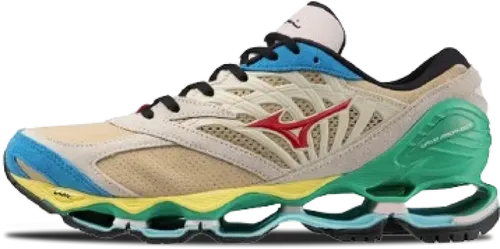
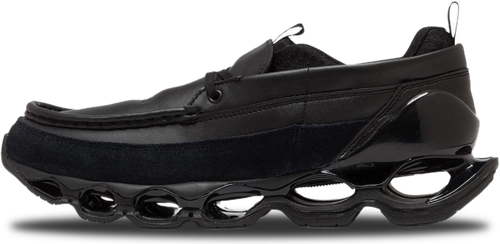
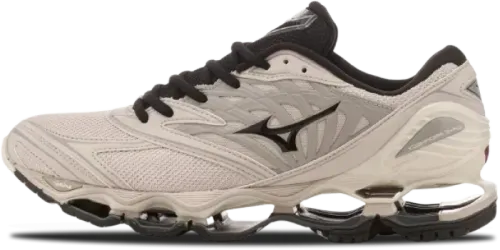
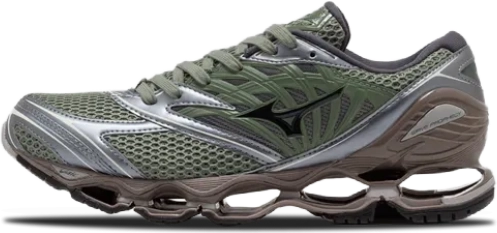
Mizuno Wave Prophecy: price, colorways, and where to buy
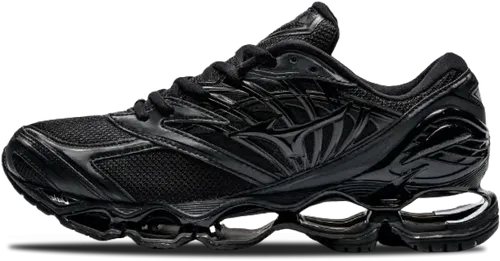
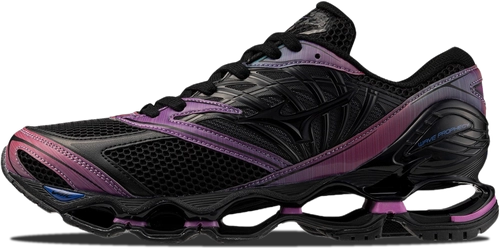
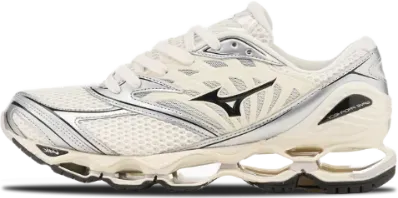
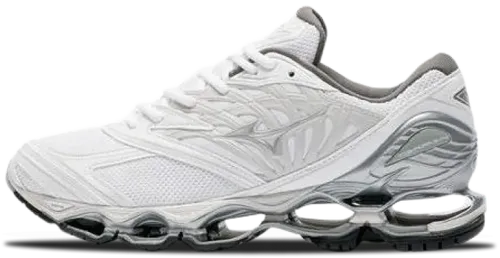
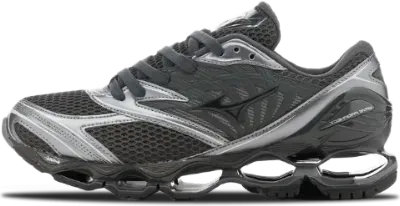
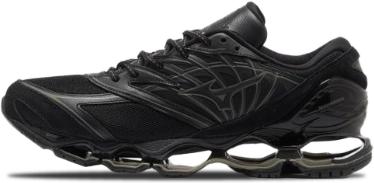
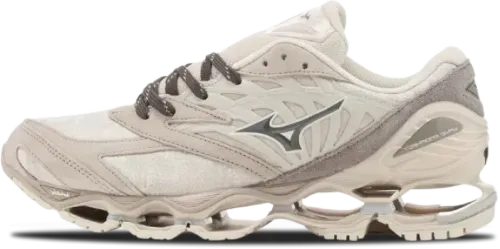
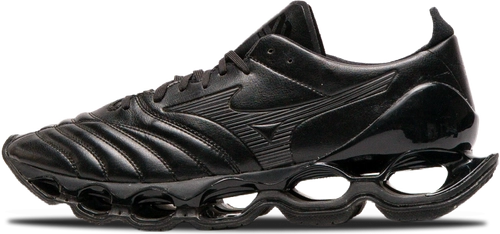
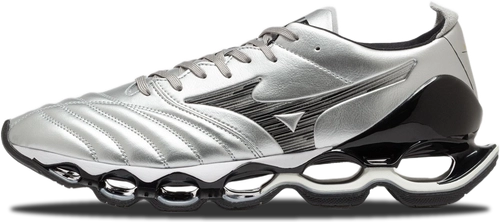
The Mizuno Wave Prophecy was born in 2011 as a high-end running shoe, before finding a second life as a lifestyle sneaker. Its signature feature is clear: the Wave plate is exposed under the heel, instead of a classic foam. This mechanical skeleton, half-organic and half-industrial, makes it instantly recognizable and has transitioned it from running to streetwear.
From the Track to Streetwear: The Story of the Wave Prophecy Since 2011
It took nearly ten years for Mizuno to release the first Wave Prophecy. Designer Kenjiro Kita and his team filed their first patents as early as 2001, centered around a simple idea: replacing foam cushioning with a deformable plate.
For years, the Prophecy remained a niche item, known only to Japanese running enthusiasts. The turning point came from fashion. Fueled by the techwear wave, the silhouette gained traction and began appearing in collaborations: Hajime Sorayama dressed it in gold chrome on the Wave Prophecy 10 in 2022, followed by Maharishi and Hiroshi Nagai. In 2026, Mizuno reissued the original Wave Prophecy 1, marking the completion of the circle.
How the Mizuno Wave Prophecy is Built
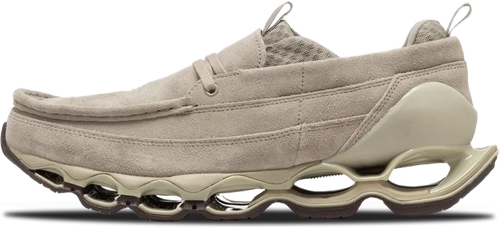
The Wave Prophecy features a unique central piece that other sneakers lack: the Infinity Wave, a thermoplastic plate with convex openings that compress and then rebound with each step. This is what absorbs impact and distributes energy along the entire length of the foot, without any visible midsole foam.
The rest of the construction supports this design choice.
- Upper: synthetic leather, TPU welds, and open mesh on the running versions; leather and nubuck on the lifestyle variations
- Midsole: full-length Wave plate, with no drop
- Outsole: Mizuno X10 carbon rubber, known for its abrasion resistance
- Weight: approximately 413 g for the original running version
What size to take for the Mizuno Wave Prophecy
The Mizuno Wave Prophecy fits true to size (TTS). For length, go with your usual shoe size.
In terms of width, the fit is standard, neither tight nor wide. Those with narrow feet might find the forefoot a bit roomy and could consider going down half a size for better support, but this is only necessary in that specific case. If you're familiar with the fit of an ASICS running shoe like the ASICS Gel-1130, you're in familiar territory: same sizing logic, same standard width.
The Versions of the Wave Prophecy: LS, Moc, and GORE-TEX
A big part of the confusion around this model comes from its variations. The Wave Prophecy LS is the most accessible lifestyle version, closest to the original running line. The Wave Prophecy Moc swaps laces for a moccasin-style fit, which is more sculptural and pricier.
On top of that, there are technical versions and collab editions.
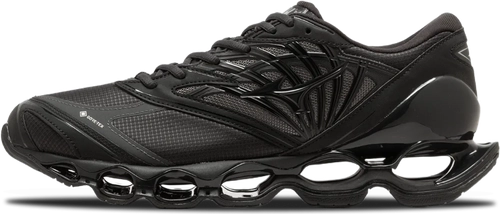
The GORE-TEX models feature a water-repellent membrane for winter, while collaborations (Maharishi, Hiroshi Nagai City Pop) and the Morelia Neo emphasize rarity. They all share the same Wave plate: the choice comes down to the material of the upper, waterproofing, and budget.
Price and Where to Buy
The price of the Wave Prophecy varies by version. The LS, closest to the original running line, has a retail price of €240. The Moc, which is laceless and more refined, goes up to €260, and the Moc GORE-TEX peaks at €354 with its water-repellent membrane. Collaborations like the Hiroshi Nagai City Pop are priced around €244.
Distribution is broad for general colorways but tighter for collabs and reissues.
This explains the differences in availability: a classic LS can be easily found at major French retailers, while a Sorayama or an OG reissue quickly climbs on the secondary market due to limited stock. The comparison tool above tracks prices in real-time across all available versions.
FAQ
Can you still run in a Mizuno Wave Prophecy?
Technically yes, the Wave plate was designed for that, but the current versions (LS, Moc) are made for lifestyle. Weighing in at 413 g and with a zero drop, it's better suited for walking and urban style than for modern training.
Is the Wave Prophecy comfortable for all-day walking?
The feel is unique: the Wave plate provides more energy return than it cushions softly. Your foot gets used to it after a few outings. For intensive urban use, it performs well, as long as you're okay with its weight.
Should you choose the LS or the Moc?
The LS remains the most versatile and closest to the original running spirit, with laces and a friendlier price. The Moc, which has no laces, aims for a more fashionable look and comes at a higher price. The choice ultimately comes down to style.
Why has the Wave Prophecy become so sought after?
Once reserved for aficionados of Japanese running, it has benefited from the resurgence of techwear and a unique mechanical aesthetic. The collaborations in 2022 and the reissue in 2026 solidified its status as a cult silhouette.